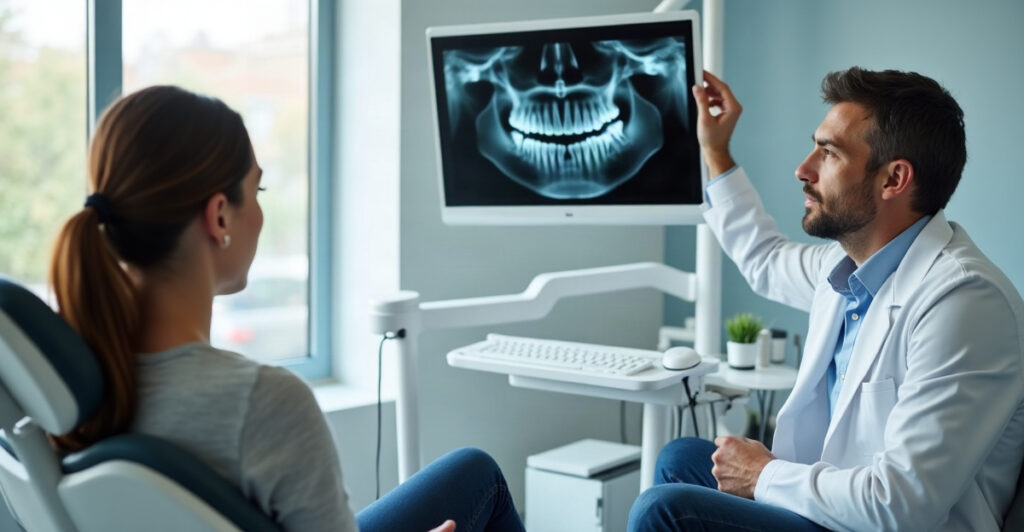
Are Dental X-Rays Necessary During Routine Checkups?

Dental X-rays can support routine checkups when they reveal details that a visual exam can’t show. They may identify decay between teeth, bone changes, root issues, or concerns beneath existing restorations.
We recommend X-rays based on oral health history, symptoms, exam findings, risk factors, and the value of recent images. We don’t rely on a fixed annual schedule.
Key Takeaways
- Dental X-rays aren’t needed at every checkup. We base the timing on each person’s clinical needs.
- X-rays can reveal issues that may cause no visible signs or pain. These include cavities between teeth, infections near tooth roots, and bone loss linked to gum disease.
- Bitewing, periapical, panoramic, and full-mouth X-rays serve different purposes. We select the image type that best evaluates the area of concern.
- Modern digital X-rays use low radiation doses. We weigh the expected diagnostic value before recommending imaging.
- Recent X-rays from another dental office may prevent duplicate imaging. We can use those records when they remain clear, current, and relevant to the present concern.
The Short Answer: X-Rays Are Helpful When They Can Change Your Care
Dental X-rays can be necessary and valuable during routine care, but not every patient needs the same images or the same schedule. We recommend X-rays when they can help us diagnose a concern, monitor a condition, or make a clearer treatment decision.
Are dental X-rays necessary at every checkup? No. A dentist should base the recommendation on oral health history, current symptoms, exam findings, risk factors, and any recent diagnostic images that are available. We take time to explain why an image may help and what we expect it to show before moving forward.
Patients should not automatically accept or decline X-rays based on a generic online schedule. Are dental X-rays necessary every year? Annual images are not a universal requirement for adults or children. Some people benefit from images more often because their risk of cavities or gum disease is higher. Others with stable oral health may need them less often.
During dental exams, we review each person’s needs rather than following a one-size-fits-all calendar. Clear communication helps patients feel informed and comfortable with the reason for every recommendation.
What Dental X-Rays Can Find That a Visual Exam May Miss
A visual exam and professional cleaning are essential parts of preventive care. However, even a careful visual exam cannot reliably show every area of concern. Teeth touch each other, roots sit below the gumline, and fillings or crowns can cover portions of a tooth.
Dental X-rays can show areas between teeth, below the gums, inside teeth, around roots, beneath restorations, and in the bone that supports the teeth. This information can help identify decay between teeth, bone changes connected with gum disease, infections, root concerns, trauma-related damage, and problems below older fillings or crowns.
Why are dental X-rays necessary in some situations? Early dental problems often do not cause discomfort. A cavity between teeth or an infection near a root may develop quietly before it becomes painful or visible. Finding concerns early can allow for simpler care and help protect healthy tooth structure.
Are dental X-rays really necessary without tooth pain? The absence of pain does not always mean there is no developing issue. At the same time, we do not recommend imaging simply because a patient has no pain or because a date on the calendar has arrived. We consider the clinical findings and whether an image would provide useful information.
Patients may also wonder why dental X-rays are necessary if a dentist can look at the teeth. A visual exam shows the visible surfaces of the mouth. An X-ray creates a view of structures that the eye cannot see directly, including spaces between teeth and areas below the gumline.
When Your Dentist May Recommend X-Rays More or Less Often
X-ray timing should reflect current oral health rather than a fixed schedule. We consider whether images are likely to reveal a concern or help us track a known condition.
Factors that may affect the recommendation include a history of cavities, current cavity risk, gum disease, bone-level changes, tooth sensitivity, pain, swelling, or dental trauma. Existing fillings, crowns, bridges, implants, and other restorations may also affect which areas need review. Children and teens may need images for growth and tooth-development concerns.
Changes since prior images matter as well. If recent, usable X-rays are available from another dental office, we may be able to review them rather than repeat images that would not add clinical value.
Some patients need bitewing X-rays more often because they have active decay, a higher cavity risk, or new concerns around existing dental work. Patients with stable oral health and a low risk of disease may need them less frequently. For this reason, are annual dental X-rays necessary? Not for everyone. The answer depends on the person and the clinical need at that visit.
Insurance coverage can vary by plan and may include its own frequency guidelines. Those coverage rules do not always determine what is clinically appropriate. We can discuss recommended care clearly so patients can make informed decisions.
The Type of X-Ray Depends on What Your Dentist Needs to Check
Dental X-ray types serve different purposes. We select the image that fits the question we need to answer instead of automatically taking every kind of image at each appointment.
Bitewing X-rays commonly help us check for decay between back teeth and review bone levels around those teeth. They are useful because many cavities begin in areas that are difficult to see during a visual exam.
Periapical X-rays show a full tooth, from the visible crown to the root, along with surrounding bone. We may recommend these images for tooth pain, possible infection, root evaluation, or a specific area affected by injury.
Panoramic X-rays provide a broad view of the teeth, jaws, sinuses, and teeth that are developing or impacted. A full-mouth series includes multiple images that give a more complete view of teeth and their supporting structures when that level of review is clinically needed.
Are dental X-rays really necessary in every form? No. The type and number of images should match the clinical question, whether we are checking for a small cavity between teeth or evaluating a broader concern involving the jaw or tooth roots.
Understanding Radiation Exposure and Modern Digital X-Rays
Radiation concerns deserve a clear and respectful conversation. Modern low-dose digital dental X-rays generally use low radiation doses, but they still involve radiation. We should consider the expected benefit of an image before taking it.
Dentists follow radiation safety principles by using X-rays when they are expected to help diagnose, monitor, or guide treatment. The goal is to balance useful diagnostic information with minimizing radiation exposure. This approach helps avoid images that do not have a clear clinical purpose.
Are digital dental X-rays safe? A licensed dentist can discuss the expected benefit and the factors that affect an individual recommendation. Pregnancy, recent imaging, health history, symptoms, and the area being evaluated may all be relevant to that conversation.
Before publishing patient education about imaging practices or technology, a licensed dentist should review the content for clinical accuracy. This review supports clear communication and helps patients make decisions with confidence.
Questions to Ask and How to Avoid Unnecessary Duplicate Images
Patients should tell the dental team about X-rays taken at another office. When appropriate, recent records can be transferred for review. This may prevent duplicate images that do not add useful information, while still allowing the dentist to recommend new images if an existing record does not adequately show the current concern.
Can my new dentist use X-rays from my previous dentist? Recent, usable images may be transferable. However, a dentist may recommend new images when prior X-rays are outdated, incomplete, unclear, or unable to answer the clinical question at hand.
Helpful questions can make the discussion clearer. We encourage patients to ask the following:
- “Why are these X-rays recommended today?”
- “What problem or area are we checking for?”
- “Do we have access to recent X-rays from another office?”
- “Which type of X-ray is needed, and how will it affect care?”
- “Is an alternative available, or could waiting create a risk of missing a problem?”
Are dental X-rays necessary? They can be an important part of preventive and diagnostic care when they provide information that a visual exam cannot. For patients in Anchorage, Eagle River, Wasilla, Palmer, Girdwood, and nearby communities, we invite conversations about dental history, recent X-rays, and imaging concerns during preventive dental care. To arrange a routine visit, please contact Alaska Dental Associates.